
Чи актуальний SCORM у 2026 році?
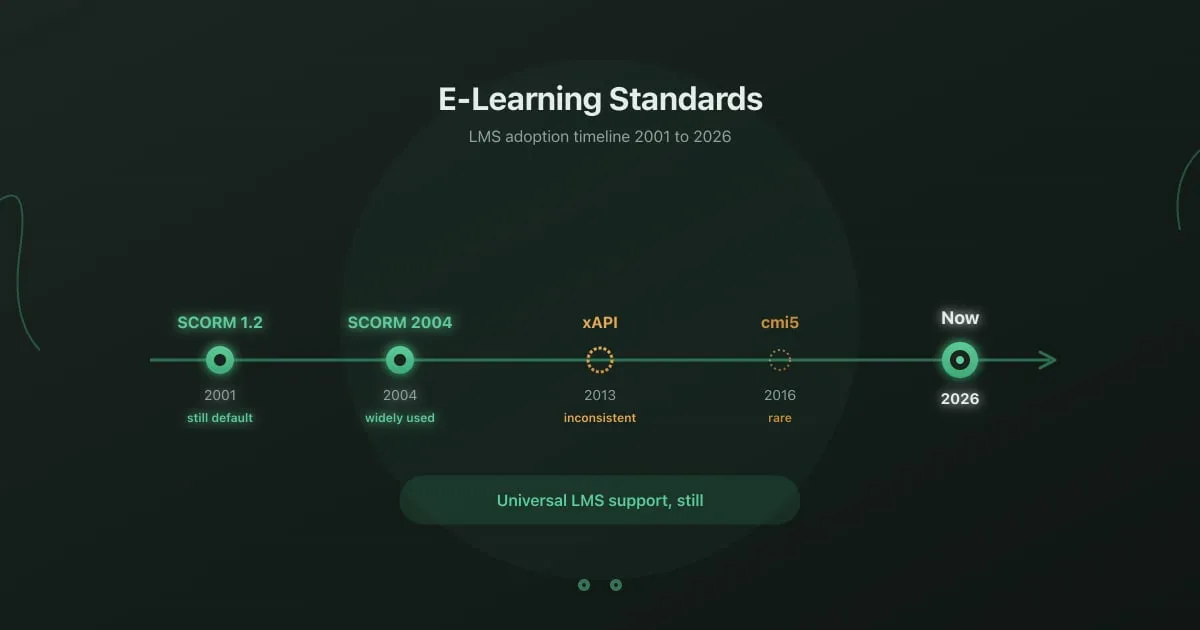
SCORM цього року виповнюється 25 років. Стандарт оголошують мертвим щонайменше раз на два роки з 2015 року, і щоразу ринок корпоративних LMS відповідає тим, що продовжує постачати його як опцію за замовчуванням.
Якщо ви обираєте платформу навчання у 2026 році, питання щодо SCORM є реальним. Ви хочете знати, чи залишиться формат підтримуваним через пʼять років, чи пропонують новіші стандарти на кшталт xAPI або cmi5 значущі переваги, і чи здатна ваша LMS їх справді читати.
Коротка відповідь: SCORM не мертвий, не замінений і не збирається залишати корпоративний стек навчання в цьому десятилітті. Довша відповідь має застереження.
Що таке SCORM і чому це питання постійно виникає?
Section titled “Що таке SCORM і чому це питання постійно виникає?”SCORM (Sharable Content Object Reference Model) — це стандарт упаковки й виконання для електронного навчання. Він визначає, як курс пакується в ZIP-файл, як спілкується з LMS про прогрес і які стани завершення є дійсними. Версії 1.2 (випуск 2001) та 2004 (випуск 2004, оновлення до Edition 4 у 2009) досі широко використовуються. Стандарт критикують за добре задокументовані обмеження: відтворення лише в браузері, обмежене відстеження поза завершенням і оцінкою, відсутність підтримки офлайн і незручну інтеграцію із сучасними JavaScript-фреймворками. Ця критика справедлива. Вона також здебільшого не пояснює, чому організації продовжують постачати SCORM. Формат тримається тому, що добре вирішує одну конкретну задачу: дозволяє постачальнику контенту доставити курс, який запрацює в LMS, яку постачальник ніколи не бачив, не тестував і з якою не інтегрувався. Ця переносимість не має рівних серед новіших стандартів у реальному продакшні, тому питання «Чи актуальний SCORM?» ставлять щороку й щороку відповідають однаково.
Де SCORM досі виграє у 2026 році?
Section titled “Де SCORM досі виграє у 2026 році?”Три якості тримають SCORM у корпоративному стеку.
Універсальна підтримка LMS. Кожна велика корпоративна LMS у 2026 році підтримує SCORM 1.2 та SCORM 2004. Це охоплює Cornerstone, SAP SuccessFactors, Workday Learning, Degreed, Docebo, LearnUpon, TalentLMS, Absorb і сотню інших платформ, які можуть використовувати ваші клієнти. Підтримка xAPI непослідовна. Підтримка cmi5 рідкісна. SCORM — єдиний стандарт, про який можна впевнено припустити, що він працюватиме.
Стабільний runtime-контракт. Курс SCORM, написаний у 2010 році, досі коректно запускається в LMS 2026 року. Runtime API не змінювався пʼятнадцять років. Порівняйте це з будь-яким контрактом JavaScript-фреймворку 2010 року.
Нуль інтеграційної роботи. Завантажте SCORM-ZIP у будь-яку LMS, і він запускається. Без API-ключів, без налаштування webhooks, без OAuth-танців. Для постачальника навчання з обізнаності, що постачає контент у сотні клієнтських LMS, це різниця між циклом продажу в кілька днів і циклом у кілька місяців.
Де SCORM не справляється?
Section titled “Де SCORM не справляється?”SCORM розроблявся для курсів-перегортачів зі вікториною наприкінці. З таким випадком він справляється добре. Будь-що амбітніше стає болісним.
Тонке відстеження. SCORM відстежує завершення уроку, оцінку та час. Це майже все, що він відстежує. Якщо вам треба знати, на які конкретно запитання співробітник відповів правильно, на яких точках рішень завагався або скільки разів переглянув відео, SCORM вам цього не скаже.
Немає нативної підтримки офлайн. Runtime SCORM припускає постійне зʼєднання з LMS. Мобільні застосунки, які повинні доставляти навчання в літаках або на виробництві, змушені обходити це припущення через кастомні обгортки.
Немає крос-платформенного навчання. Якщо учень дивиться навчальне відео на YouTube, читає повʼязану статтю, а потім проходить тест, SCORM фіксує лише тест. Супутній досвід невидимий для LMS.
Незручно всередині сучасних фреймворків. SCORM використовує застаріле рукостискання через window.API, розроблене для спливних вікон. Інтеграція його в плеєр на React чи Vue вимагає glue-коду, який більшість команд рано чи пізно проклинає.
SCORM vs xAPI vs cmi5
Section titled “SCORM vs xAPI vs cmi5”Це порівняння, про яке покупці запитують найчастіше.
| Стандарт | Призначення | Підтримка LMS (2026) | Сильні сторони | Слабкі сторони |
|---|---|---|---|---|
| SCORM 1.2 | Упаковка + runtime | Універсальна | Переносимість, стабільність | Тонке відстеження |
| SCORM 2004 | Упаковка + runtime | Широка | Послідовність, навігація | Складність, досі лише браузер |
| xAPI | Statement API | Непослідовна | Багате, гнучке відстеження | Потребує LRS, фрагментована екосистема |
| cmi5 | Упаковка поверх xAPI | Рідкісна | Сучасний, поєднує обидва підходи | Майже немає впровадження |
xAPI (Experience API, іноді називають Tin Can) справді значно потужніший. Він записує довільні твердження «субʼєкт дієслово обʼєкт» у Learning Record Store (LRS). Він може фіксувати навчання, що відбувається поза LMS. Це правильна основа для сучасної аналітики навчання.
Проблема в тому, що постачальники корпоративних LMS ставилися до підтримки xAPI як до функції-галочки вже десять років. Більшість «підтримки xAPI» означає, що LMS приймає xAPI-твердження, якщо ви їх надсилаєте, але не надає жодного звітування над ними. Розрив між тим, що xAPI уможливлює, і тим, що LMS насправді виводять назовні, величезний.
cmi5 був розроблений, щоб виправити це, поєднавши упаковку у стилі SCORM з відстеженням через xAPI. На папері він вирішує проблему. Впровадження у 2026 році залишається мінімальним, з ініціативою ADL Міністерства оборони США й жменею урядових навчальних програм як основних користувачів у продакшні.
Коли досі обирати SCORM?
Section titled “Коли досі обирати SCORM?”Обирайте SCORM у 2026 році, якщо справедливе хоча б одне з наступного:
- Ваш контент має запускатися в LMS клієнтів, які ви не контролюєте
- Вам потрібен формат упаковки, який ще працюватиме у 2031 році
- Ваші покупці — корпоративні команди L&D, які вже мислять у термінах SCORM
- Ваш бюджет на інтеграцію LMS дорівнює нулю
Обирайте xAPI або cmi5, якщо ви контролюєте платформу навчання наскрізно, вам справді потрібна багата аналітика навчання, і ваш постачальник LMS або LRS підтримує їх як першокласну функцію, а не як додаток.
Прагматичний шаблон, до якого приходить більшість постачальників навчання з обізнаності з безпеки: постачати SCORM за замовчуванням і додавати xAPI-твердження як додатковий сигнал, коли клієнтська LMS їх приймає. SCORM робить роботу. xAPI робить спостереження.
Як виглядає SCORM у навчанні з обізнаності з безпеки?
Section titled “Як виглядає SCORM у навчанні з обізнаності з безпеки?”Контент навчання з обізнаності має конкретні обмеження, що сприяють SCORM. Вправи повинні розгортатися в клієнтських LMS від десятків постачальників. Цикли розгортання вимірюються тижнями, а не кварталами. Покупці очікують на SCORM 1.2 як базовий результат у будь-якому RFP з навчання з безпеки.
RansomLeak експортує кожну вправу як SCORM 1.2 за замовчуванням. Клієнти завантажують ZIP у ту LMS, якою володіють, учні проходять навчання, а звіти про завершення повертаються через стандартний runtime. Для організацій, які хочуть глибшу аналітику, ми паралельно доставляємо xAPI-твердження, тож багатіші дані доступні, не роблячи SCORM опціональним. Це патерн, до якого приходить більшість постачальників навчання з безпеки у цій сфері, і не тому, що SCORM кращий за xAPI. Тому що SCORM — єдиний стандарт, який ринок реально дотримується.
Розгортання на open-source LMS стикається з тією самою реальністю. Наш посібник з open-source LMS для навчання з безпеки охоплює компроміси, а наш глибокий огляд SCORM-навчання з безпеки розбирає деталі упаковки й доставки для тих, хто будує або купує SCORM-контент у 2026 році.
Чесна відповідь на 2026 рік
Section titled “Чесна відповідь на 2026 рік”SCORM не захоплює. Він не сучасний. Він не дасть вам запустити красиву панель аналітики подій про те, як ваші співробітники думають про фішинг. Що він зробить — це надійно запустить ваше навчання з безпеки на кожній LMS, яка може бути у вашого клієнта, протягом наступного десятиліття, без сервісного залучення.
Для більшості бюджетів на навчання з обізнаності з безпеки це і є рішення. Цікаве питання не «Чи мертвий SCORM?». Воно в тому, що ви плануєте робити поверх нього, коли підтримка xAPI нарешті дозріє.
Доставляйте навчання з обізнаності з безпеки, яке працює на кожній корпоративній LMS. Перегляньте наш безкоштовний каталог навчання з обізнаності з безпеки зі 200+ інтерактивними вправами, що доставляються як SCORM 1.2, або прочитайте наш глибокий огляд SCORM-навчання з безпеки для повної технічної картини.