Skip to content

Blog

OWASP Top 10 for LLM Applications: 10 free training exercises now live

OWASP Top 10 for LLM Applications training course - terminal showing all 10 exercises live with checkmarks

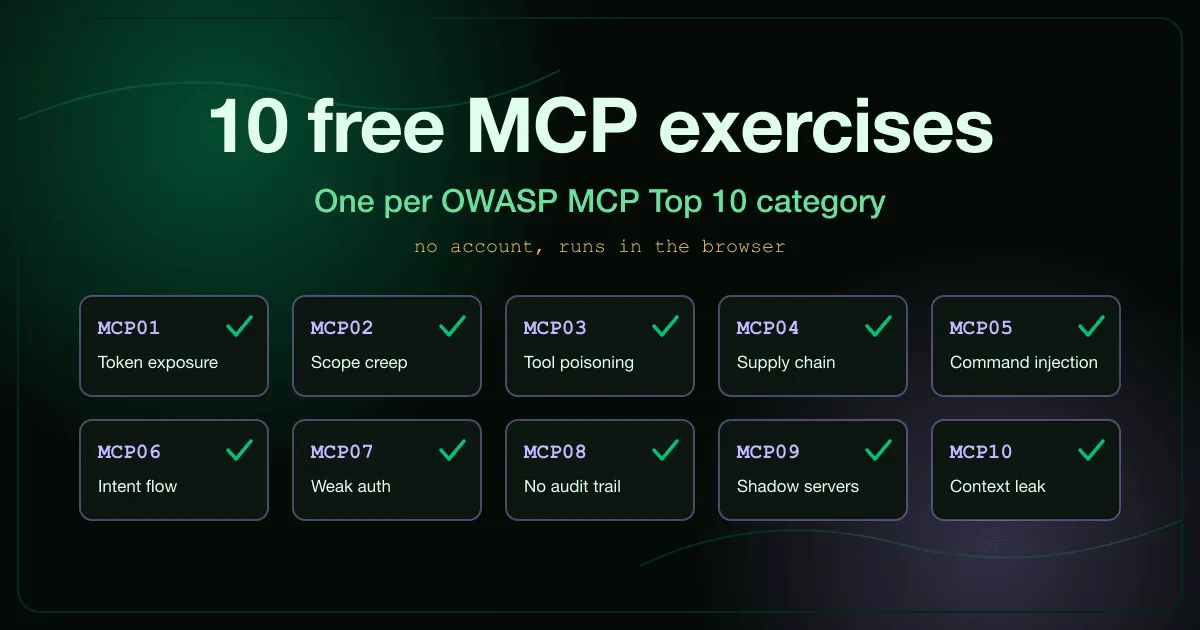
Every risk category in the OWASP Top 10 for LLM Applications now has a dedicated training exercise on RansomLeak. Ten exercises covering ten attack scenarios, from prompt injection to denial-of-wallet. All free, no account required.

The OWASP Top 10 for LLM Applications is the industry standard for categorizing AI security risks. This course turns each category into a hands-on simulation where employees experience these attacks firsthand in realistic workplace scenarios.

Quishing: How QR Code Phishing Bypasses Your Email Filters

Quishing attack flow showing a malicious QR code being scanned by a phone and redirecting to a fake login page for credential harvesting

Your company’s email gateway can parse URLs, detonate attachments in a sandbox, and flag sender domains that were registered yesterday. It cannot read a QR code.

That is the entire premise of quishing. Attackers embed a malicious URL inside a QR code image, drop it into an email, and let the recipient’s phone do the rest. The email contains no clickable link. No suspicious attachment. Just a square of black and white pixels that your security tools treat as a harmless image file.

The attack is not new, but it scaled fast. Abnormal Security’s 2024 threat report found that QR code phishing attacks increased by over 400% in the second half of 2023 compared to the same period in 2022. HP Wolf Security documented corporate quishing campaigns impersonating Microsoft 365, DocuSign, and internal HR portals throughout 2024.

What makes quishing different from garden-variety email phishing is the device switch. The victim reads the email on their laptop but scans the code with their phone. That phone usually sits outside the corporate security perimeter. No web proxy, no DNS filtering, no endpoint detection. The attacker just moved the entire attack to an unmanaged device.

RansomLeak vs Hoxhunt: Security Awareness Training Compared (2026)

Side-by-side comparison of RansomLeak interactive 3D simulations versus Hoxhunt AI-adaptive phishing platform

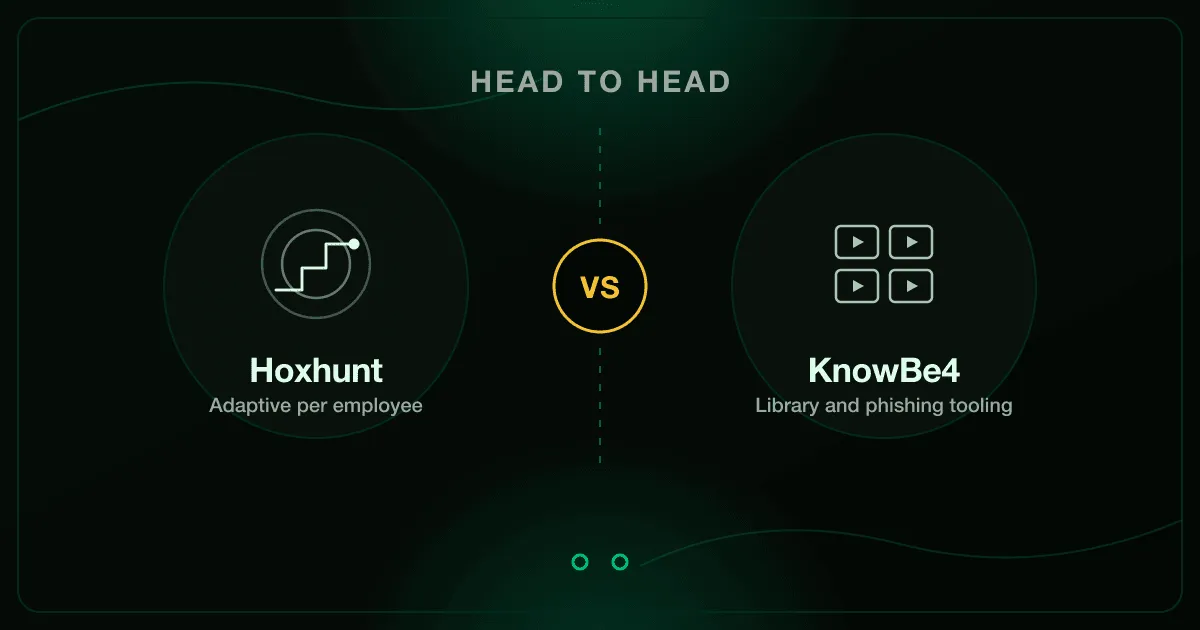
Hoxhunt and RansomLeak both reject the idea that security training should be a passive, video-heavy compliance exercise. Both platforms bet on engagement over lecture slides. But they solve the engagement problem in fundamentally different ways.

Hoxhunt builds AI-adaptive phishing simulations that adjust difficulty based on each employee’s performance. The system learns who falls for what and sends progressively harder attacks to keep people challenged. It is a sophisticated approach to the phishing simulation problem specifically.

RansomLeak builds interactive 3D simulations where employees practice handling full attack scenarios. Not just phishing, but ransomware, social engineering, vishing, deepfakes, AI security threats, and GDPR compliance. The focus is hands-on practice across the full spectrum of security risks.

Both approaches work. The question is which one matches what your organization actually needs.

RansomLeak vs KnowBe4: Security Awareness Training Compared (2026)

Side-by-side comparison of RansomLeak interactive 3D simulations versus KnowBe4 video content library for security awareness training

KnowBe4 is the largest security awareness training platform in the world. They have been in the market since 2010, trained tens of millions of users, and built a content library that runs into thousands of modules. If you are evaluating security awareness training, KnowBe4 will be on your shortlist. It should be.

But “largest” and “best fit” are different things. KnowBe4’s strengths are real, and so are the reasons organizations look beyond it. Pricing scales fast. The content library is massive but largely video-based. Phishing simulations are strong, but the broader training experience can feel like a compliance checkbox.

RansomLeak takes a different approach. Interactive 3D simulations instead of video lectures. Hands-on exercises where employees make decisions and see consequences. SCORM packages that work with any LMS, or a standalone cloud platform if you do not have one. Over 100 free exercises with no sign-up required.

This is an honest comparison. We will cover where KnowBe4 is stronger, where RansomLeak is stronger, and who each platform is built for. We are biased (we built RansomLeak), so we will be transparent about it.

RansomLeak vs Ninjio: Security Awareness Training Compared (2026)

Side-by-side comparison of RansomLeak interactive 3D simulations versus Ninjio Hollywood micro-learning video content

Most security awareness training is boring. Both Ninjio and RansomLeak acknowledge this. Where they disagree is the solution.

Ninjio says the answer is better entertainment. Produce Hollywood-quality animated episodes that tell real cybersecurity stories in three to four minutes. Make training so watchable that employees actually look forward to it. Replace the forgettable compliance slides with something people want to see.

RansomLeak says the answer is better practice. Build interactive 3D simulations where employees handle realistic attack scenarios. Make training something people do, not something they watch. Replace passive viewing with active decision-making.

One platform invests in production value. The other invests in interaction design. Both reject the status quo, but they reject it in different directions.