Skip to content

gdpr

3 posts with the tag “gdpr”

EU AI Act and GDPR: Where the Two Laws Overlap

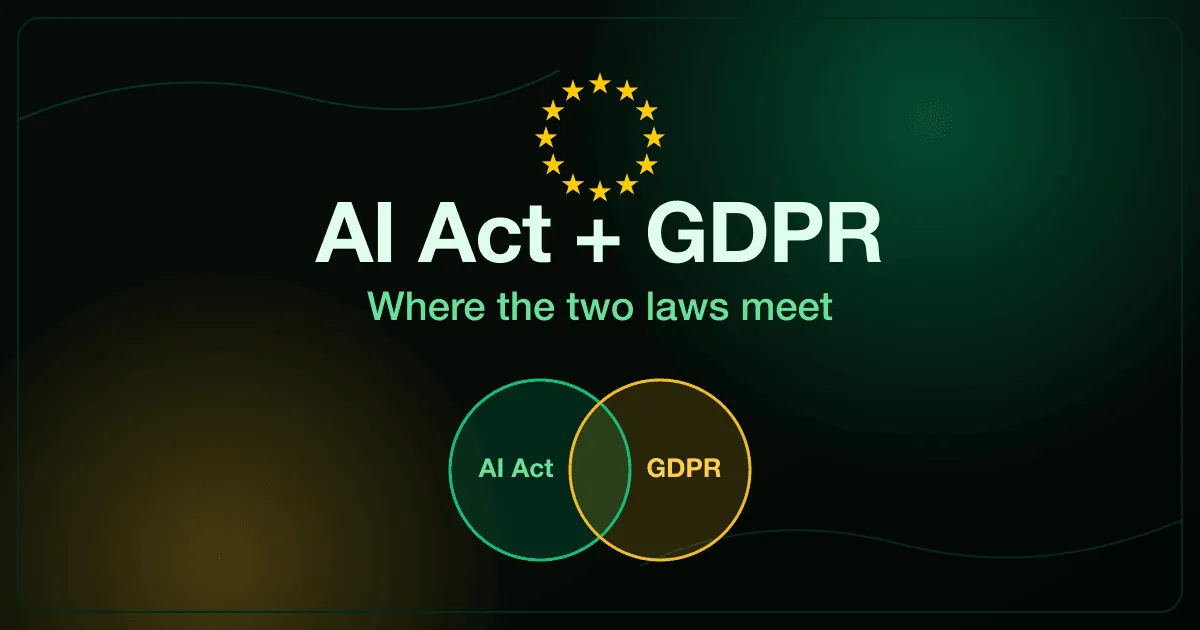
EU AI Act and GDPR shown as two interlocking rings sharing a common core inside a circle of EU stars

Teams often treat the EU AI Act as a brand new rulebook that lands on a clean desk. It does not. If your AI system touches personal data, GDPR was already on that desk, and the AI Act stacks on top of it.

That stacking is where most of the confusion lives. The same project can owe a Data Protection Impact Assessment under one law and a Fundamental Rights Impact Assessment under the other, and nobody wants to run two parallel compliance tracks if one mapped program will do.

GDPR Training for Employees

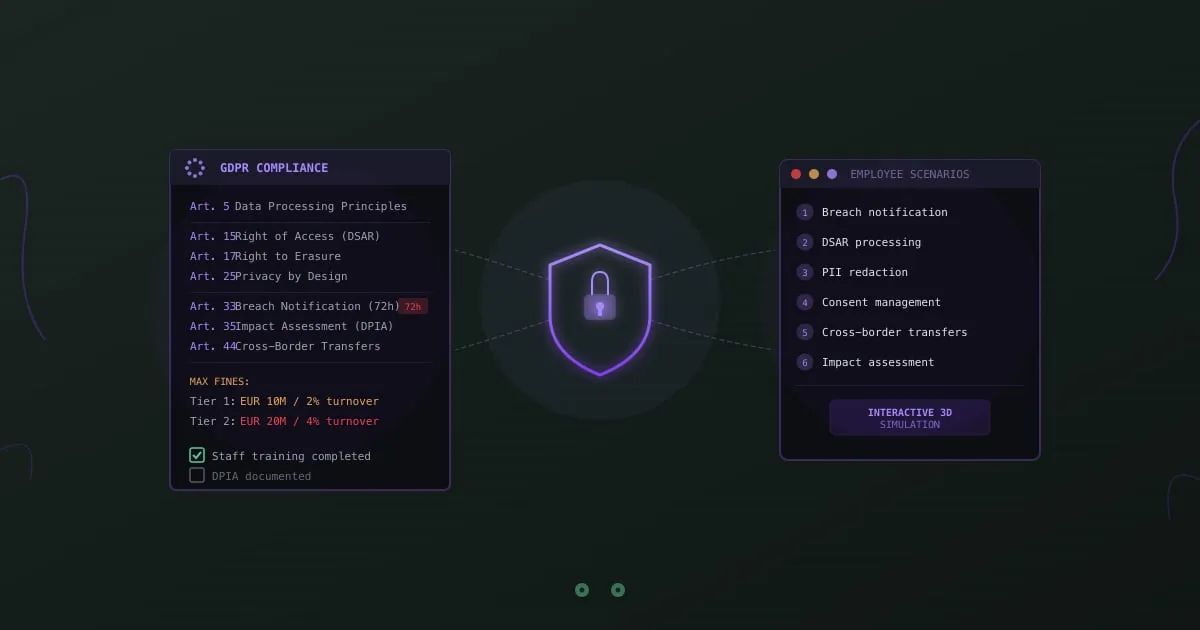
GDPR employee training - compliance document with interactive training scenarios

A marketing manager adds a customer’s email to a campaign list without checking consent records. A support agent shares a user’s account details with someone claiming to be their spouse. A developer copies production data containing real names and addresses into a staging environment.

None of these people intended to violate the GDPR. All of them did.

The General Data Protection Regulation has been enforceable since May 2018. Eight years in, fines keep climbing. The Irish Data Protection Commission fined Meta EUR 1.2 billion in 2023 for illegal data transfers to the US. The Italian Garante fined OpenAI EUR 15 million in late 2024 for ChatGPT’s privacy violations. These headlines grab attention, but the pattern behind them is consistent: organizations that treated GDPR as a legal department problem instead of a company-wide responsibility.

Your lawyers can’t prevent the marketing manager from misusing consent data. Your DPO can’t watch every developer’s staging environment. The only thing that scales is training, and most GDPR training programs are doing it wrong.

Compliance Training That Passes Audits

Compliance training - security shield with checkmarks representing regulatory compliance

Regulatory compliance is not optional. If you handle healthcare data, process payments, or serve European customers, specific frameworks mandate how you protect information. Security awareness training sits at the center of nearly every one of those requirements.

And yet most organizations treat compliance training as a checkbox exercise. Annual videos. Generic quizzes. Certificates that prove nothing except attendance. I’ve watched this pattern repeat for years, and it fails both the spirit and the letter of what regulators actually expect.

The organizations that get this right do something different. They build training that satisfies auditors and creates employees who understand why regulations exist, how their daily actions either protect or expose sensitive data, and what to do when something looks wrong.