Skip to content

Blog

Ransomware Awareness Training

Ransomware attack visualization showing encrypted files, a locked padlock, and a ransom note countdown timer

A finance team member opens a PDF labeled “Q4 Invoice Reconciliation.” The file came from what looks like a known vendor. Thirty seconds later, file extensions on her desktop start changing. Documents she opened yesterday now end in .locked. Programs freeze. A full-screen message appears with a Bitcoin address and a 48-hour countdown.

She pulls her ethernet cable. Calls IT. Does not touch the power button.

That instinct saved her company roughly two weeks of recovery time, because she had trained for this exact moment.

AI Coding Assistant Security Risks

AI coding assistant security risks - code editor with prompt injection attack visualization

Your developers are 10x more productive with AI coding assistants. So are the attackers targeting your organization.

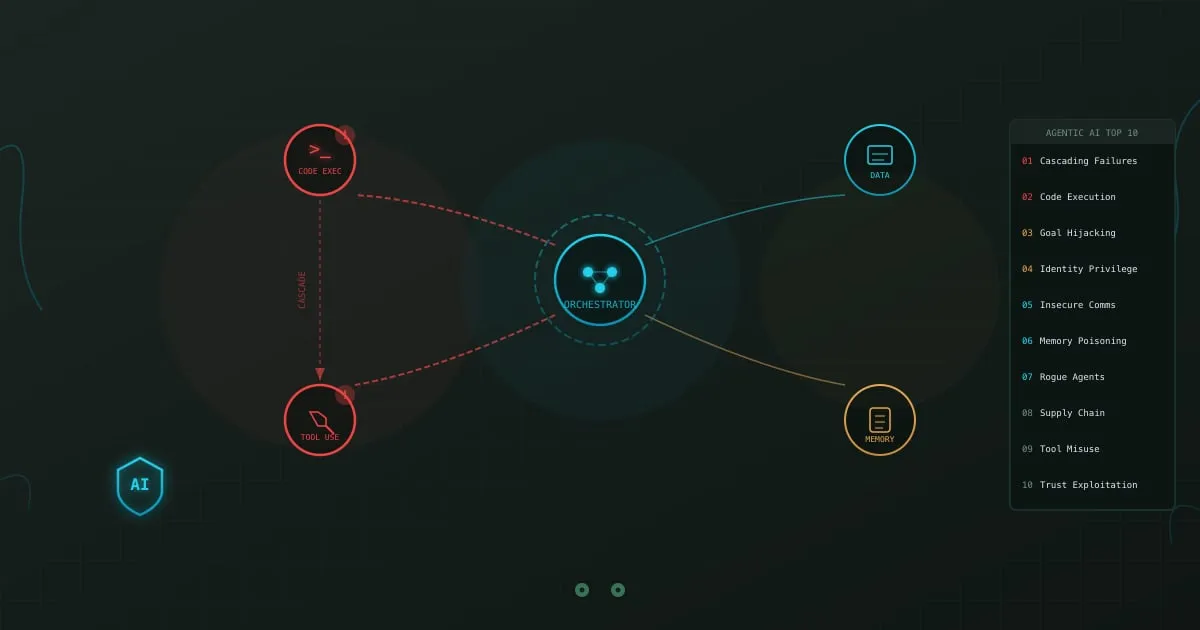
In November 2025, Anthropic disclosed what security researchers had feared: the first documented case of an AI coding agent being weaponized for a large-scale cyberattack. A Chinese state-sponsored threat group called GTG-1002 used Claude Code to execute over 80% of a cyber espionage campaign autonomously. The AI handled reconnaissance, exploitation, credential harvesting, and data exfiltration across more than 30 organizations with minimal human oversight. This incident illustrates the broader agentic AI security risks that OWASP now tracks in a dedicated Top 10 list.

This wasn’t a theoretical exercise. It worked.

AI coding assistants have become standard in development workflows. GitHub Copilot. Amazon CodeWhisperer. Claude Code. Cursor. These tools autocomplete functions, debug errors, and write entire modules from natural language descriptions. Developers who resist them fall behind. Organizations that ban them lose talent.

But every line of code these assistants suggest passes through external servers. Every context window they analyze might contain secrets. Every prompt they accept could be an attack vector. The productivity gains are real. So are the risks.

Clawdbot (Moltbot) Security Risks: What to Know

Clawdbot (Moltbot) security risks - lobster mascot with sensitive files and infostealer warning

Silicon Valley fell for Clawdbot overnight. A personal AI assistant that manages your email, checks you into flights, controls your smart home, and executes terminal commands. All from WhatsApp, Telegram, or iMessage. A 24/7 Jarvis with infinite memory.

Security researchers saw something different: a honey pot for infostealers sitting in your home directory.

Clawdbot stores your API tokens, authentication profiles, and session memories in plaintext files. It runs with the same permissions as your user account. It reads documents, emails, and webpages to help you. Those same capabilities make it a perfect attack vector.

The creator, Peter Steinberger, built a tool that’s genuinely useful. The official documentation acknowledges the risks directly: “Running an AI agent with shell access on your machine is… spicy. There is no ‘perfectly secure’ setup.”

This article examines what those risks actually look like.

15 Cyber Security Activities for Employees

Cyber security activities for employees - team collaboration on security challenges

Most security awareness programs fail for the same boring reason: they’re boring.

Employees sit through a 45-minute video about password hygiene, click “Next” through a quiz, and forget everything before lunch. You know it. They know it. The phishing click rates prove it.

The fix isn’t better videos. It’s getting people out of their chairs and into scenarios that feel real. The 15 activities below are ones we’ve seen work in actual companies, with actual skeptical employees, producing actual measurable improvements. Some take 15 minutes. Some need a full hour. All of them beat another compliance slideshow.

If you want a broader look at cybersecurity training exercises and how to structure a program, we covered that separately. This post is the practical playbook: specific activities you can run this week.

Barrel Phishing vs Phishing

Barrel phishing attack - two-stage email sequence with trust-building message followed by malicious payload

Day one: An email from a new vendor asks if you’re the right person to discuss a partnership opportunity. Nothing suspicious. No links. No attachments. You reply confirming your role.

Day three: A follow-up arrives with a “proposal document” attached. You open it without hesitation. You already know this sender.

This is barrel phishing. The first email had one purpose: make you trust the second one.