Skip to content

Blog

10 Free OWASP LLM Top 10 AI Exercises
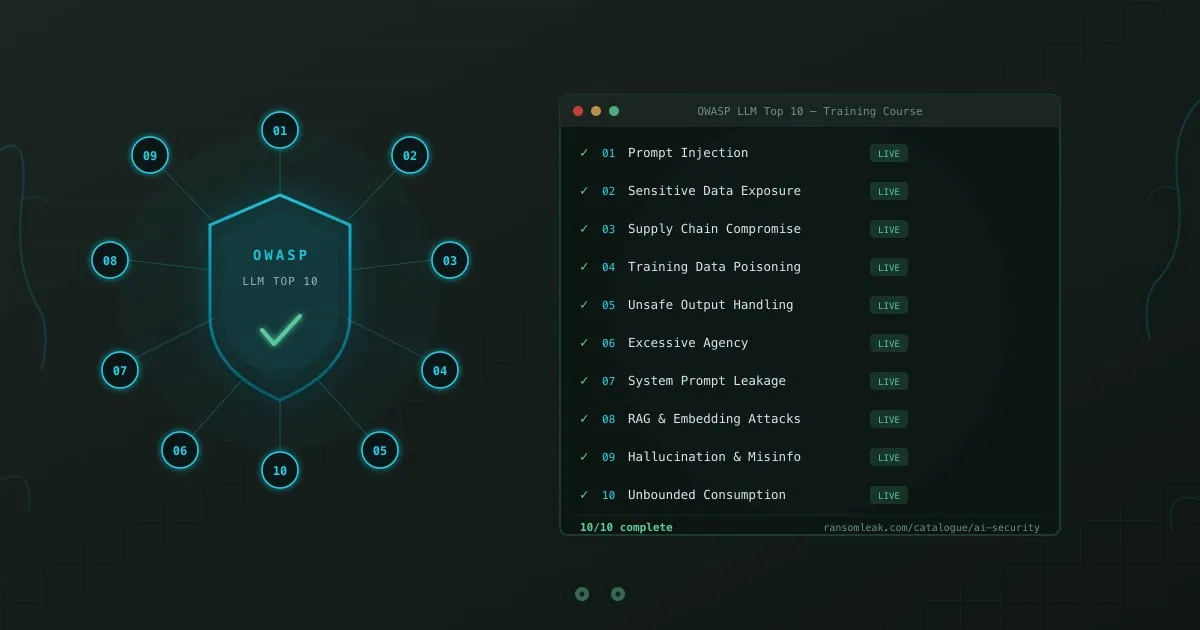
OWASP Top 10 for LLM Applications training course - terminal showing all 10 exercises live with checkmarks

Every risk category in the OWASP Top 10 for LLM Applications now has a dedicated training exercise on RansomLeak. Ten exercises covering ten attack scenarios, from prompt injection to denial-of-wallet. All free, no account required.

The OWASP Top 10 for LLM Applications is the industry standard for categorizing AI security risks. This course turns each category into a hands-on simulation where employees experience these attacks firsthand in realistic workplace scenarios.
Quishing (QR Code Phishing): How to Stop It

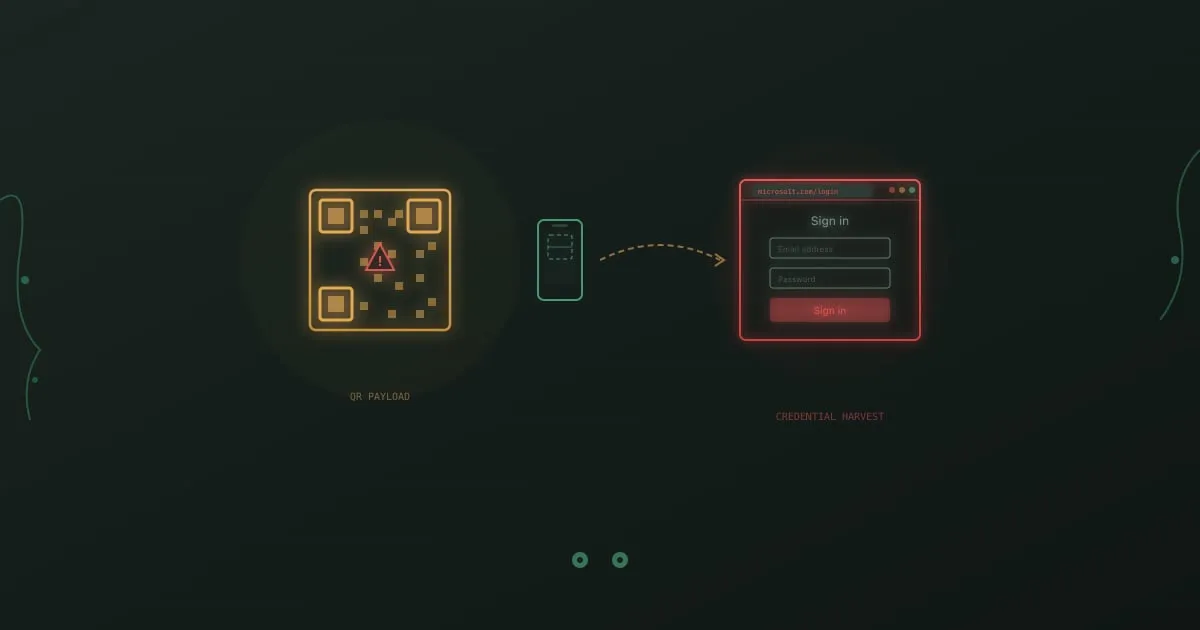
Quishing attack flow showing a malicious QR code being scanned by a phone and redirecting to a fake login page for credential harvesting

Quishing is phishing delivered through a QR code. The attacker encodes a malicious URL inside a square of pixels, drops it into a corporate email or prints it over a legitimate sign, and lets the target’s phone do the rest. Email filters see an image, not a link. The victim scans on a personal device that sits outside every corporate security control. That mismatch is what makes quishing work.

RansomLeak vs Hoxhunt Comparison

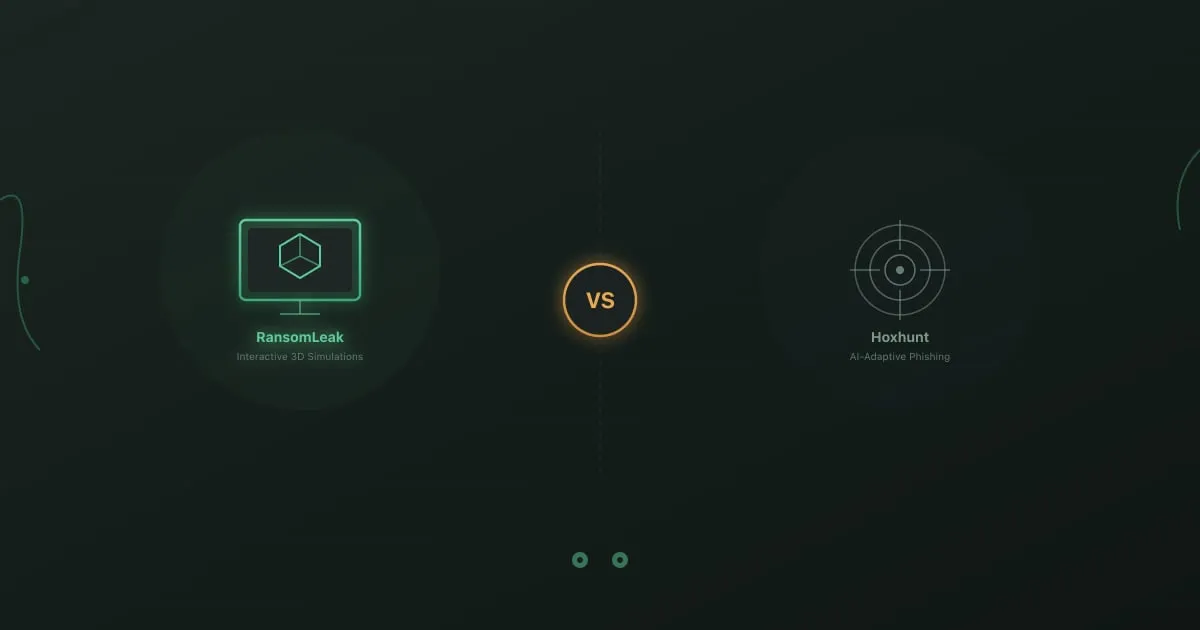
Side-by-side comparison of RansomLeak interactive 3D simulations versus Hoxhunt AI-adaptive phishing platform

Hoxhunt and RansomLeak both reject the idea that security training should be a passive, video-heavy compliance exercise. Both platforms bet on engagement over lecture slides. But they solve the engagement problem in fundamentally different ways.

Hoxhunt builds AI-adaptive phishing simulations that adjust difficulty based on each employee’s performance. The system learns who falls for what and sends progressively harder attacks to keep people challenged. It is a sophisticated approach to the phishing simulation problem specifically.

RansomLeak builds interactive 3D simulations where employees practice handling full attack scenarios. Not just phishing, but ransomware, social engineering, vishing, deepfakes, AI security threats, and GDPR compliance. The focus is hands-on practice across the full spectrum of security risks.

Both approaches work. The question is which one matches what your organization actually needs.

RansomLeak vs NINJIO Comparison

Side-by-side comparison of RansomLeak interactive 3D simulations versus Ninjio Hollywood micro-learning video content

Most security awareness training is boring. Both Ninjio and RansomLeak acknowledge this. Where they disagree is the solution.

Ninjio says the answer is better entertainment. Produce Hollywood-quality animated episodes that tell real cybersecurity stories in three to four minutes. Make training so watchable that employees actually look forward to it. Replace the forgettable compliance slides with something people want to see.

RansomLeak says the answer is better practice. Build interactive 3D simulations where employees handle realistic attack scenarios. Make training something people do, not something they watch. Replace passive viewing with active decision-making.

One platform invests in production value. The other invests in interaction design. Both reject the status quo, but they reject it in different directions.

RansomLeak vs Phished Comparison

Side-by-side comparison of RansomLeak interactive 3D simulations versus Phished AI-automated phishing platform

Phished and RansomLeak share a European DNA and a belief that traditional video-based training does not change behavior. Both platforms try to fix the engagement problem. But they approach it from opposite directions.

Phished automates everything. AI generates personalized phishing simulations, adjusts difficulty automatically, and triggers training content when employees need it. The philosophy is that automation produces consistency and scale. Set it up, and the system runs your awareness program with minimal manual intervention.

RansomLeak makes everything interactive. 3D simulations put employees inside attack scenarios where they make decisions and learn from consequences. The philosophy is that hands-on practice builds skills that passive content cannot. The training itself does the heavy lifting, not the automation around it.

Both approaches have merit. The right choice depends on whether your program needs automation breadth or training depth.